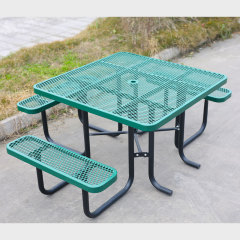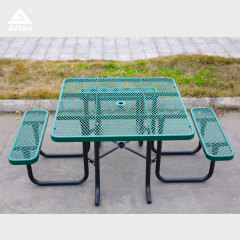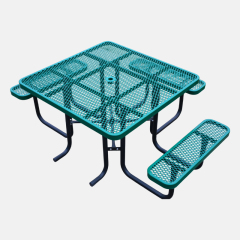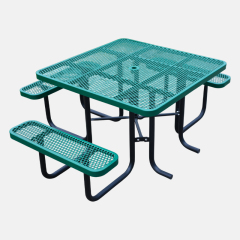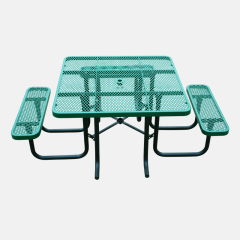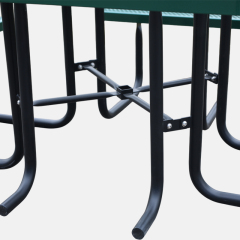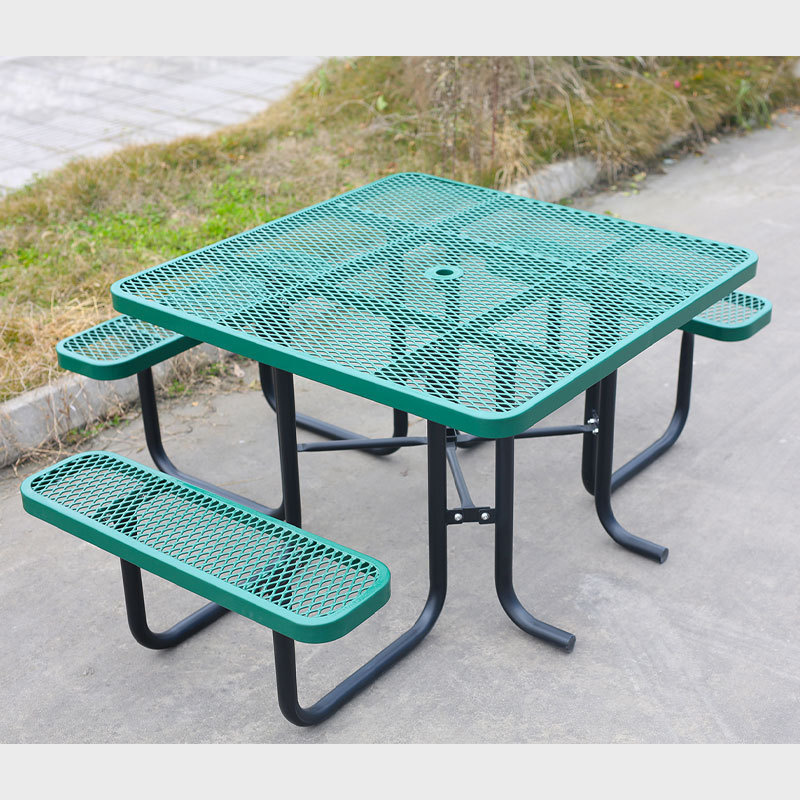
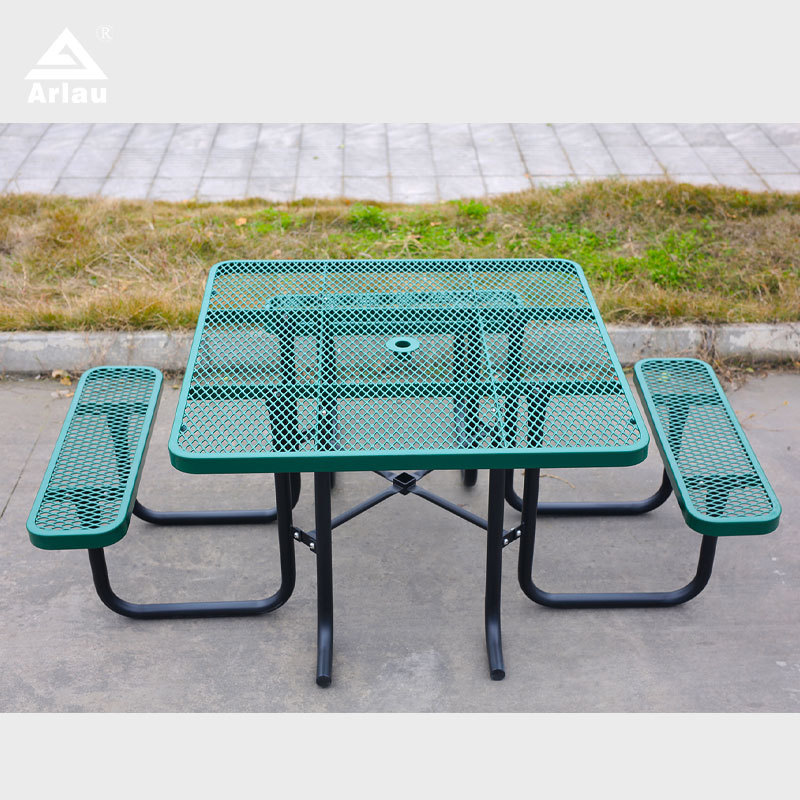
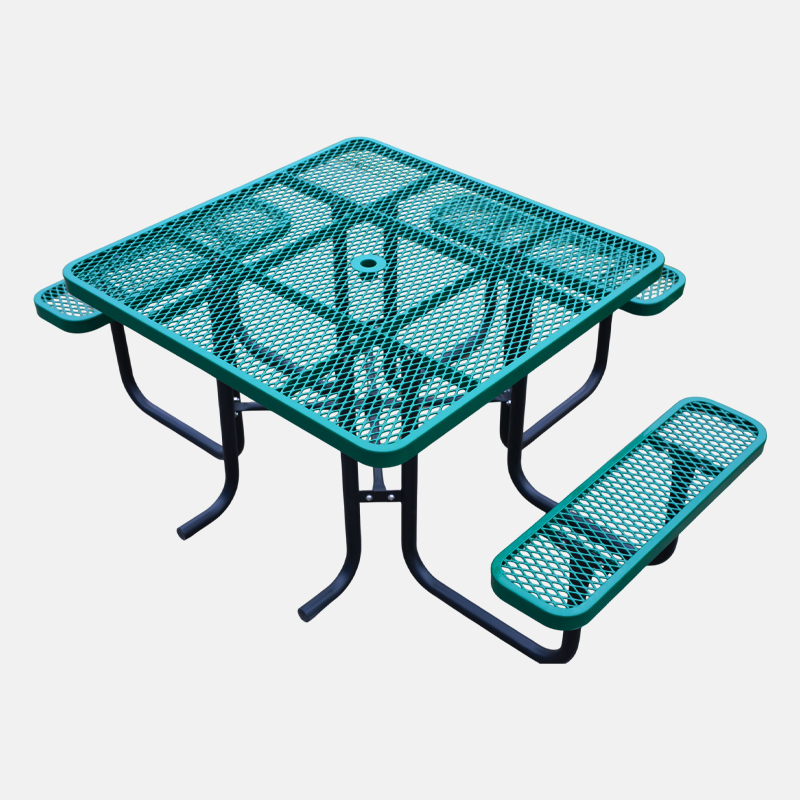
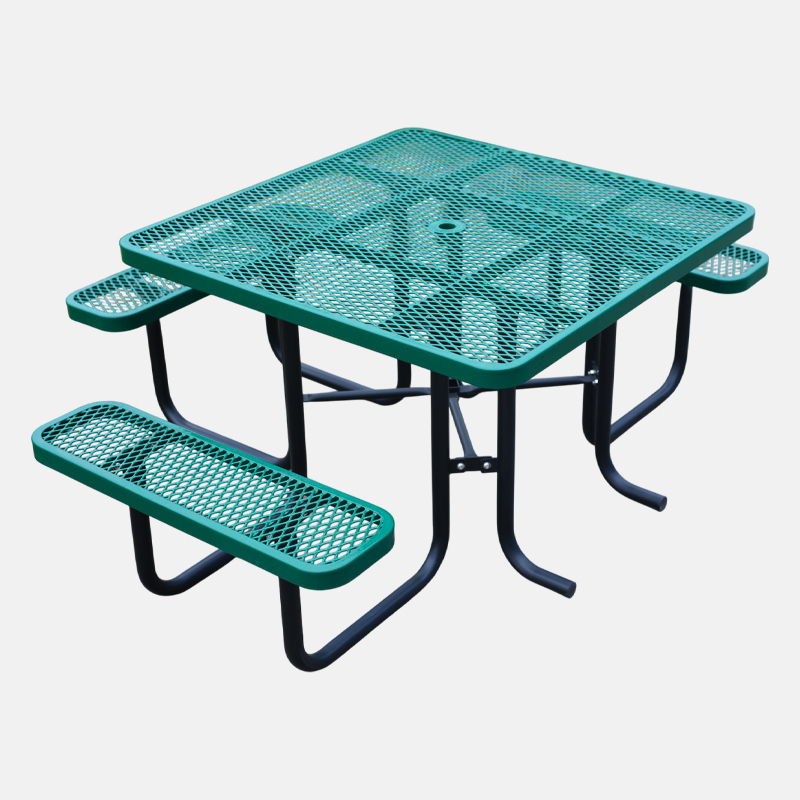
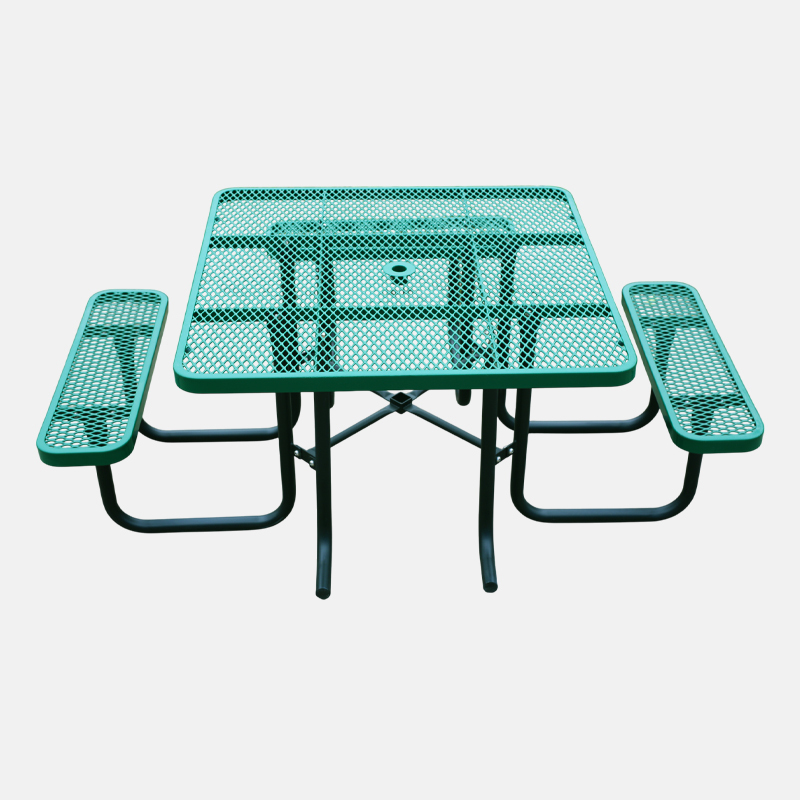
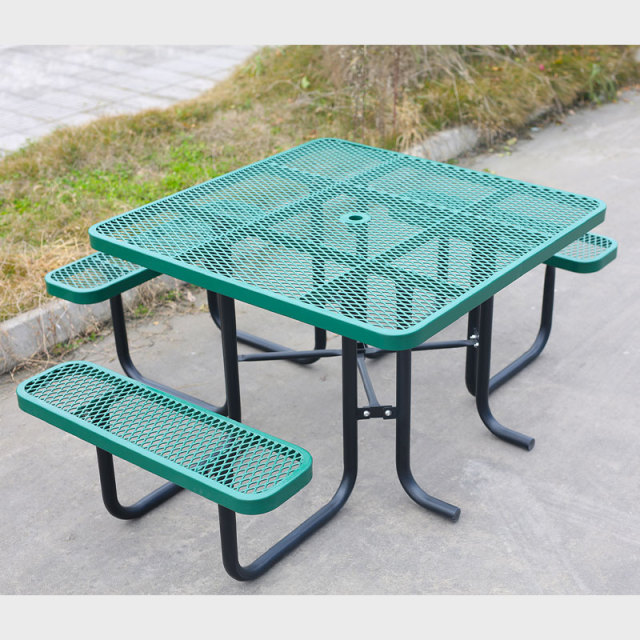
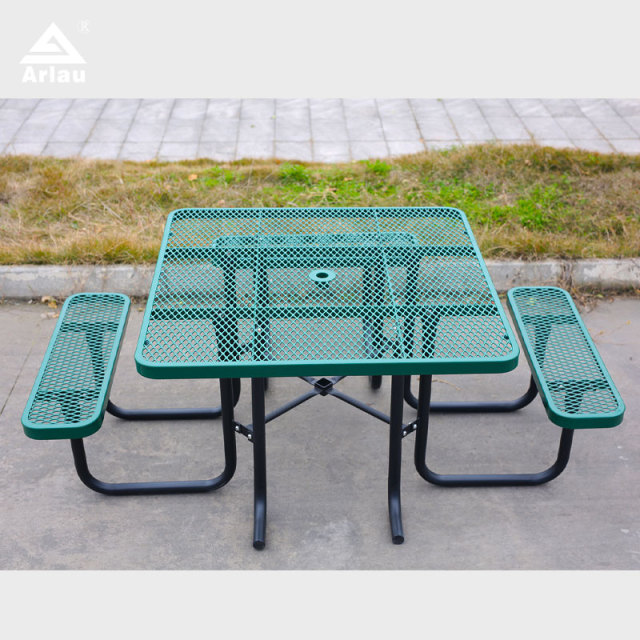
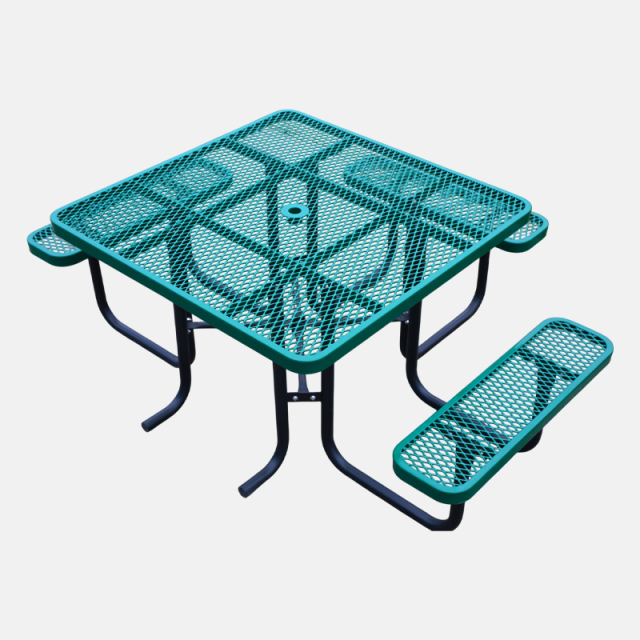
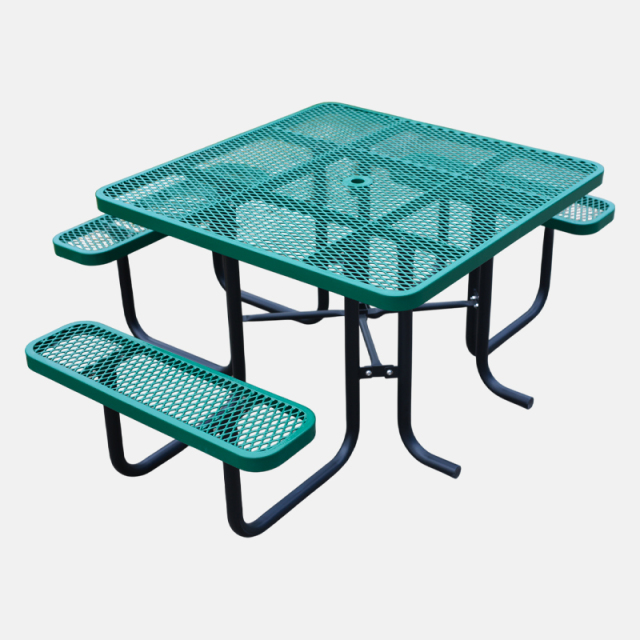
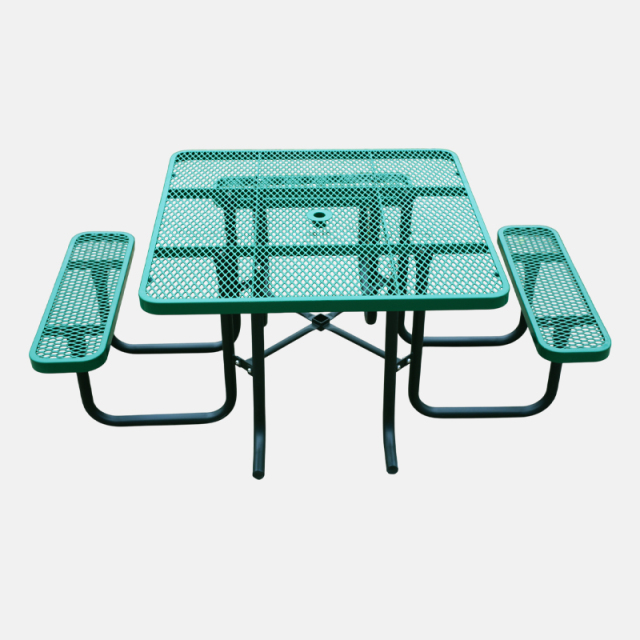
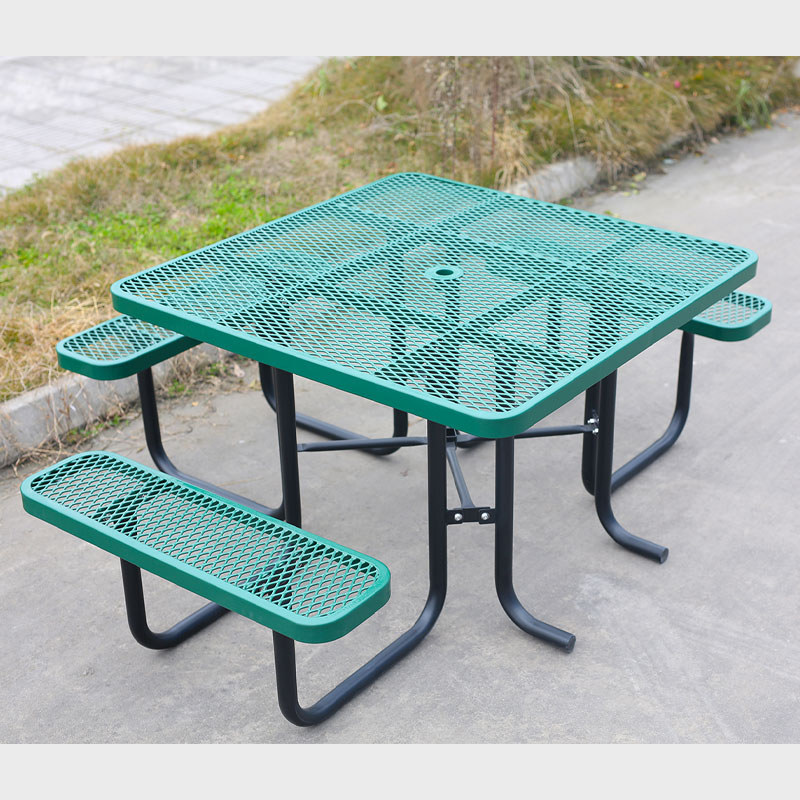
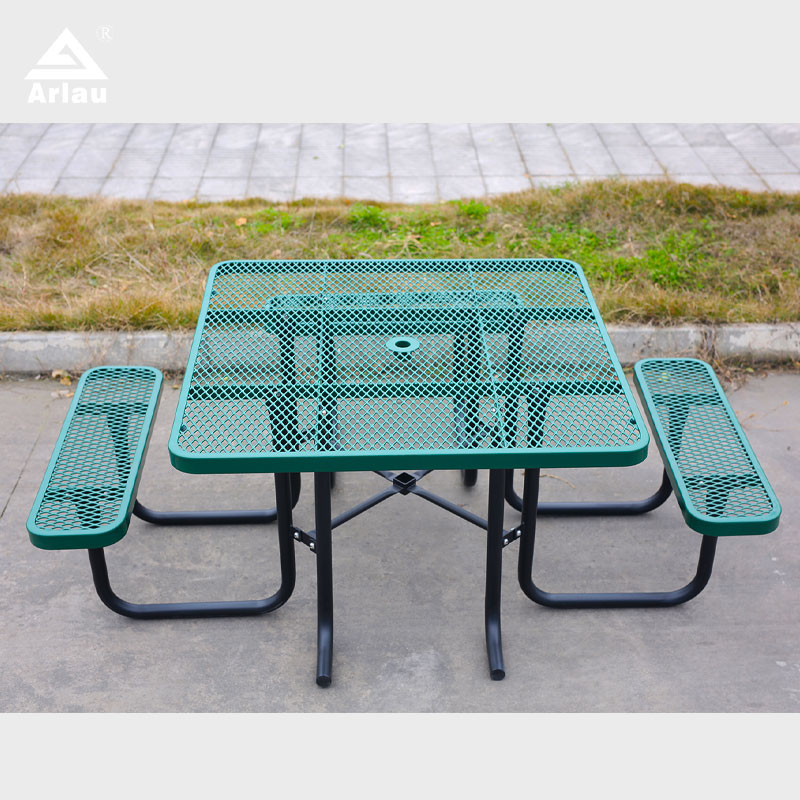
The Arlau 46 inch picnic table is the accessible model in our metal mesh line. A 46 by 58 inch steel top sits on a welded tubular frame, with two attached benches along the sides and an open approach at one end, so a wheelchair user pulls up to the table itself instead of sitting beside it. We build this table for places where outdoor furniture is used hard every day: municipal parks, schoolyards, healthcare campuses, civic plazas and scenic pull-offs. It replaces two kinds of table. One is the painted steel or timber unit that needs sanding, sealing or repainting every few seasons. The other is the solid-top table that holds a puddle after every storm. The open mesh lets rain fall straight through, and the thermoplastic coating is the finish itself rather than a coat of paint over one, so there is no repainting cycle to budget for. Day to day it is self-service furniture. Comparisons between one outdoor picnic table supplier and another usually come down to three things: how thick the steel is, what the finish actually is, and whether the accessible end works in practice. We put all three in writing with the quotation, drawing included, so the comparison stays like for like.
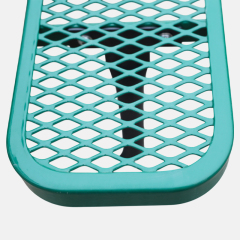
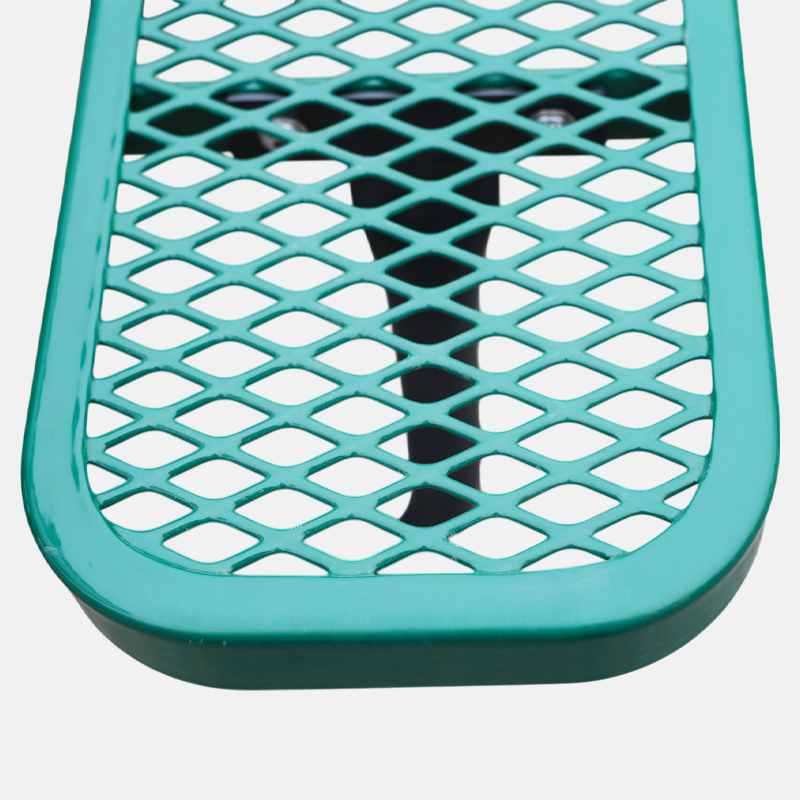
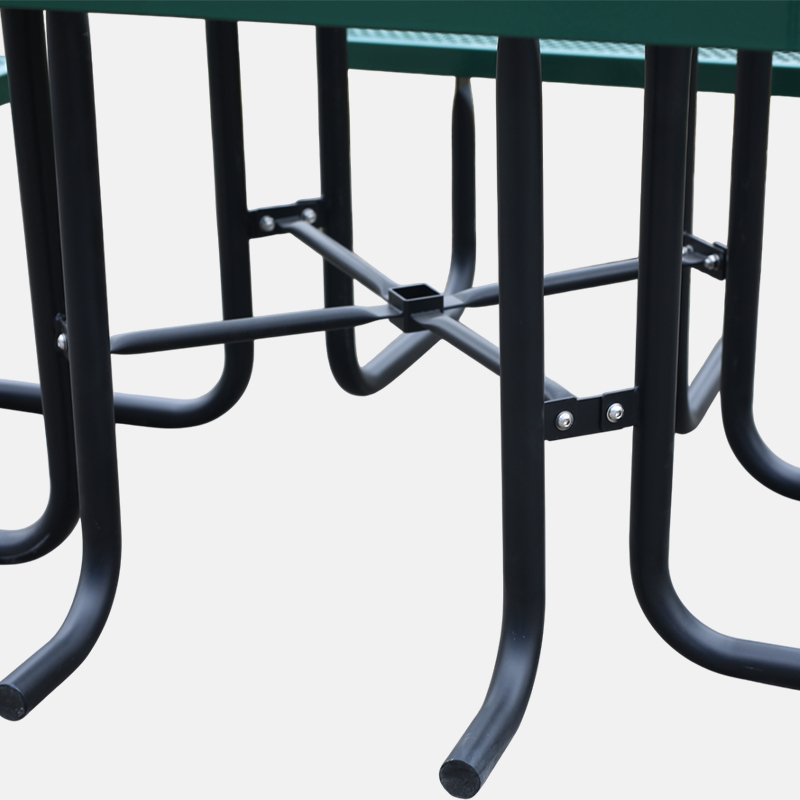
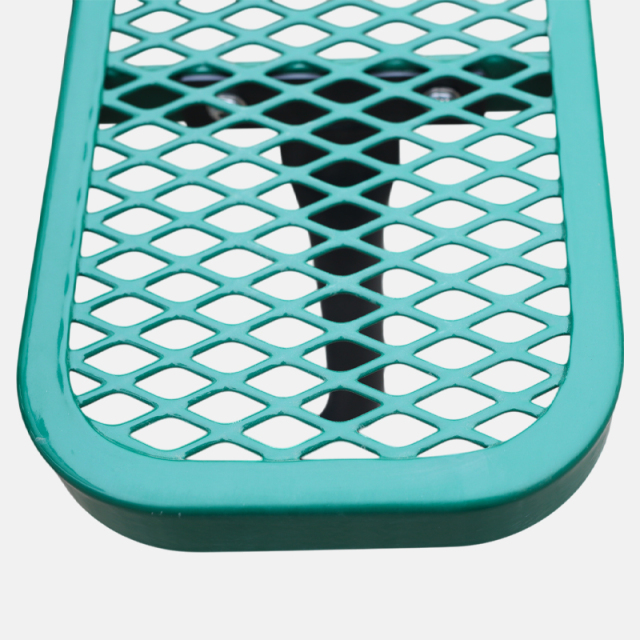
Gauge is the first line worth comparing on any outdoor picnic table supplier's spec sheet, because the surface is what fails first on a public table. People stand on it to reach a branch, drop bags on it and drag bench ends across it. Openings formed in plate this thick keep their shape, where thinner sheet starts to dish and flex within a season or two. The unit is welded rather than assembled from bolted flat sections, which is what stops a long bench from developing a rock. Edges and fasteners. Every edge a hand, a knee or a wheel can meet is rounded rather than left as a cut corner, which matters in a family park and in a schoolyard. Sites that intend to leave a table in place for a decade or more are better served by a heavier steel picnic table that costs more once and less every year after that.
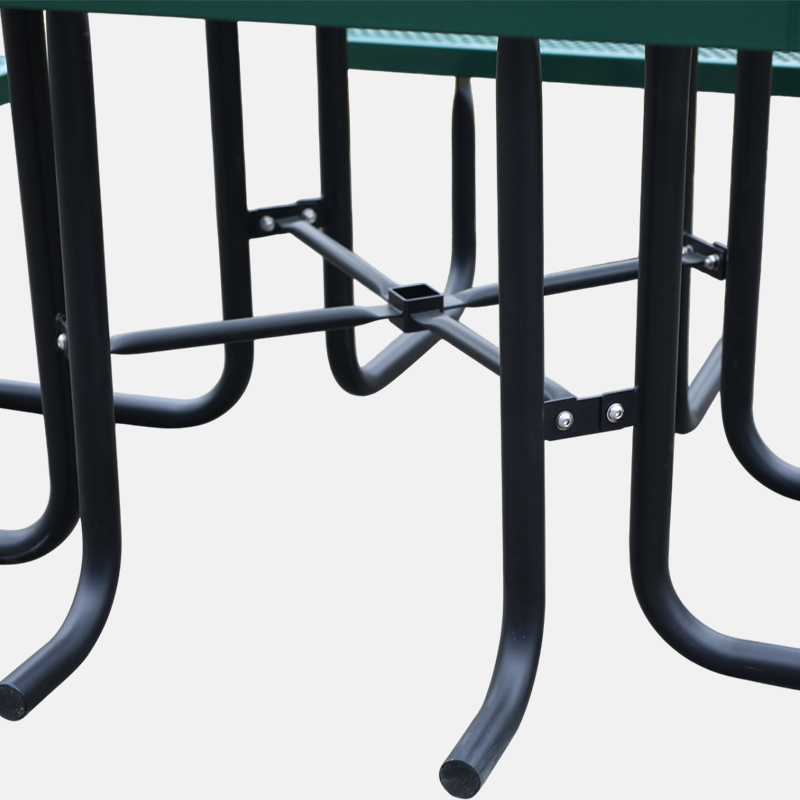
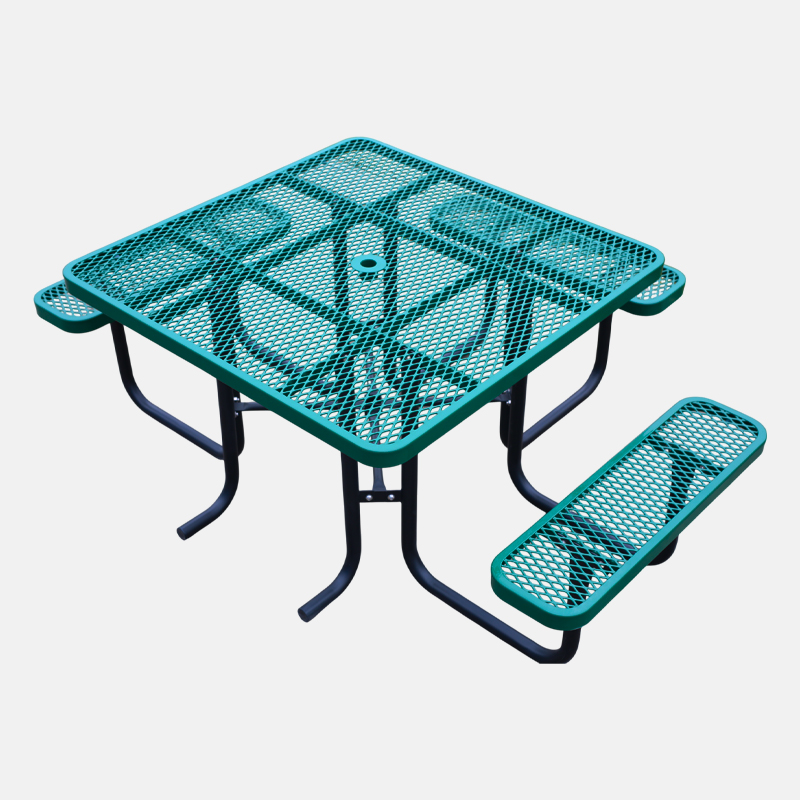
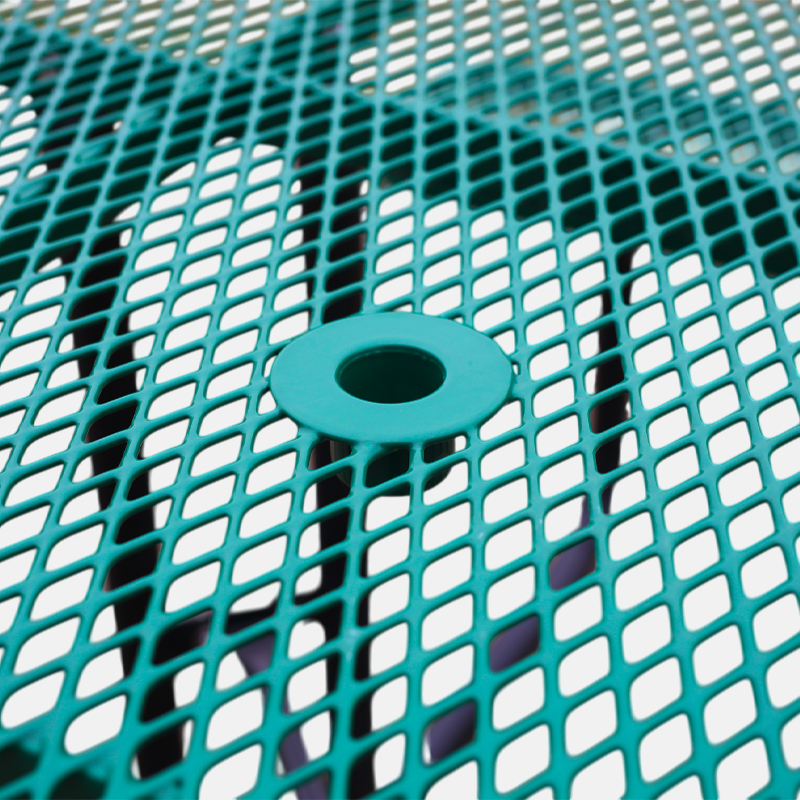
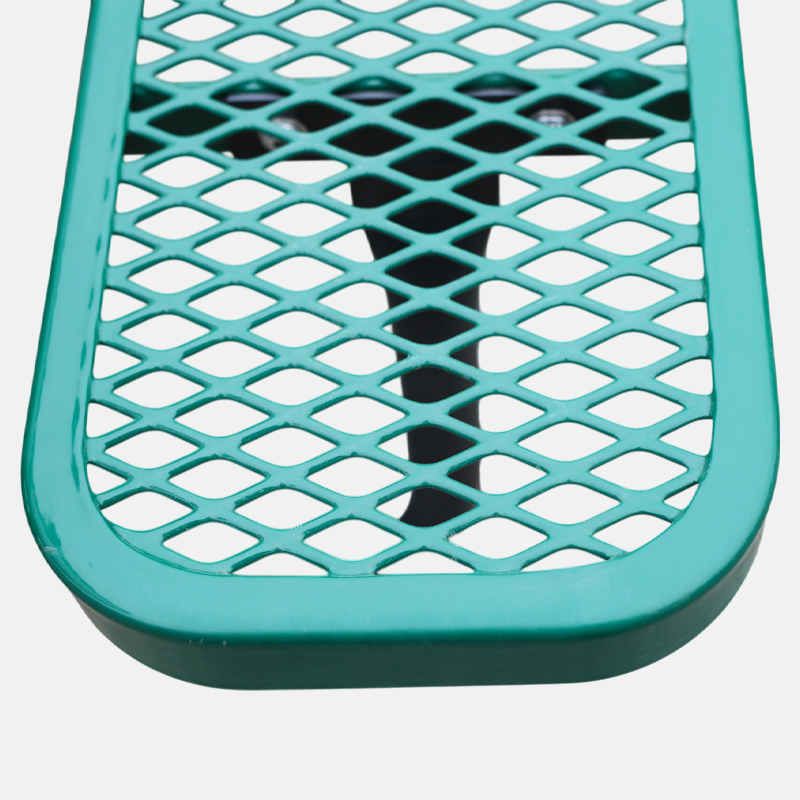
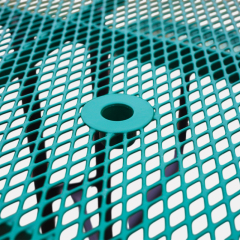
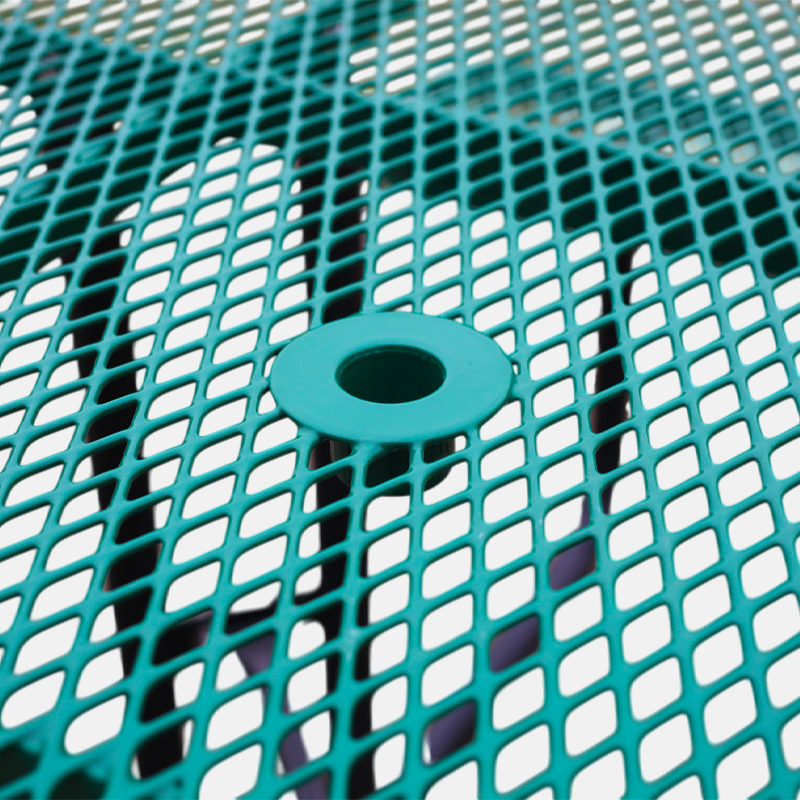
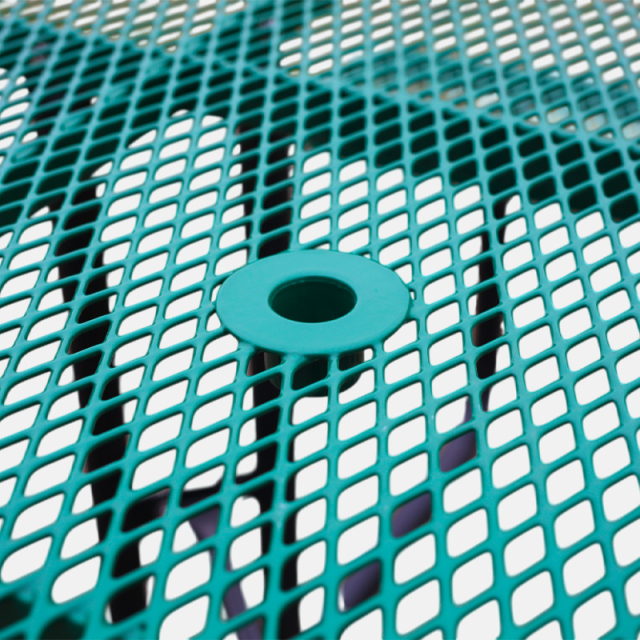
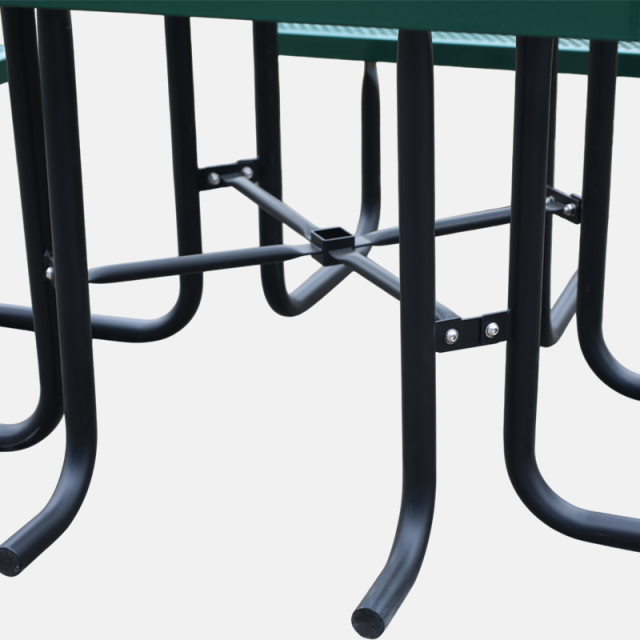
Thermoplastic is not paint with a longer label on it. It goes on as a thick skin bonded to the steel and stays there — no chalking, no flaking back to bare metal at the edges, no annual repaint. On a table that stands outside 365 days a year, that skin is what the maintenance budget actually rides on. The coating is formulated to resist rust and corrosion and to hold its colour under UV. Graffiti, scuffs and bird mess sit on the surface rather than soaking in, so they lift off with a cloth instead of a sanding block. Chipping resistance matters most at the corners and around the umbrella opening, where paint on a lighter table from another outdoor picnic table supplier fails first. Two coatings, two jobs. The mesh top and seats carry the thermoplastic. Splitting the coatings is deliberate: the frame takes knocks and movement, the top takes sun, rain and cleaning. Colour. This table is finished in green mesh over a black frame. The green is a fade-resistant coating rather than a dye, so it holds its tone through summer after summer; as with any coated surface, some change is possible over many years depending on climate and exposure. What that means in service. An all weather outdoor picnic table should need nothing beyond a hose and an occasional wipe. There is no sealing, sanding or repainting cycle written into the year — usually the argument that gets a heavy duty picnic table approved over a lighter, cheaper one.

Accessibility on this table is geometry rather than a label. The top sits at 30.5 inches, standard dining height, with the seats at 18 inches, and one end of the table is left open so neither the bench ends nor the frame block a wheelchair. A user approaches from the end, rolls under the overhang and eats at the same surface as everybody else, with clear space beneath the top and the table edge at a usable height. This model provides one accessible position per table. Where a site needs two — a hospital courtyard or a busy plaza, for example — our double-sided 8-foot table is the one to specify. Put a companion seat beside the accessible position rather than stranding it at the end of a row, and leave enough space between neighbouring outdoor picnic tables that a chair can turn without reversing into the next unit. Checking against local rules. As a commercial picnic table manufacturer we lay our ADA tables out to align with accessibility guidelines, but the standard that applies to your site — federal, state or municipal — is the one your inspector will measure. Send us the dimensions you will be checked against and we will confirm them against the drawing before the order goes into production. Where this matters most. A metal picnic table set at a trailhead, a clinic entrance or a school gate is often the only seat someone in a wheelchair can reach without leaving the path. Getting the end clearance right is what turns a piece of park furniture into an inclusive one.
| Specification | Detail |
|---|---|
| Model | TB58 |
| Type | ADA wheelchair-accessible metal mesh picnic table |
| Overall footprint | 80 in L × 65 in W × 30.5 in H |
| Tabletop | 46 in L × 58 in W × 2 in thick, 30.5 in high |
| Seats | 38 in L × 12 in W × 2 in thick, 18 in high, two attached benches |
| Top and seat material | 2.5–3.0 mm (9-gauge) steel plate mesh |
| Frame | 2 in tubular steel with φ42 mm welded pipe bracket |
| Finish, top and seats | Thermoplastic coating, green |
| Finish, frame | DuPont outdoor powder coat, black |
| Fasteners | 304 stainless steel screws |
| Umbrella opening | 1.75 in through the centre of the top |
| Unit weight | 280 lb |
| Mounting | Pre-drilled points for surface anchoring |
| Assembly | Supplied unassembled with hardware and instructions |
Routine cleaning. Warm water and a mild household detergent are usually the whole job. The non-porous thermoplastic skin releases spilled drinks, food residue and dust instead of drawing them in, so a soft cloth or a soft brush takes the marks off the mesh top and seats and the surface is ready to use again as soon as it drains. On a table that lives outdoors, a weekly rinse-down during the busy season is enough to keep it looking presentable; nothing has to be dried afterwards.
What to avoid. Solvent-based products — acetone, paint thinner, tar and adhesive removers — soften and dull the coating, and once that skin is compromised the steel underneath is exposed. Skip abrasive pads, wire brushes and scouring powders for the same reason: they scratch the finish and leave fine grooves where dirt and moisture collect. Strong acid descalers and heavy bleach mixes are also worth keeping away from a coated steel picnic table; a pH-neutral cleaner does the same work without the risk.
Gum and graffiti. Let the cleaner sit on the mark for a minute so it lifts, then take it off with a plastic scraper or a cloth rather than a blade or a screwdriver. The coating is formulated so spray paint and marker sit on top of it, and the earlier a tag is removed the less chance the pigment has to settle into the texture.
Pressure washing. A power washer is fine on the top and seats with a fan tip held at a sensible distance. Keep the nozzle moving, don't hold it close to an edge or the rim of the umbrella opening where the coating terminates, and don't drive water straight into the frame joints or the seat bracket.
Snow, ice and de-icing salt. Clear snow with a plastic shovel or a stiff broom; a metal-edged blade can chip the coating at the table edge. Don't chop ice off the surface with a metal tool. Road salt and calcium chloride are the hardest things a metal picnic table meets in a northern winter, so sweep the residue off rather than letting it sit, and rinse the top and frame once the thaw comes.
Seasonal check. Once a year — spring is the natural moment — run a hand over the 304 stainless screws and re-torque anything that has worked loose, and rinse grit out of the joints where the benches meet the frame. Check that the mesh openings are clear, since a blocked run of holes holds water against the surface instead of letting it through.
Umbrellas and storage. Pull the umbrella out ahead of high winds and store it dry. If a unit comes out of service for a season, keep it on a level, dry surface rather than damp ground, and don't stack heavy items on the mesh top.
What you never need to do. There is no waxing, sealing or repainting in the year for this all weather outdoor picnic table — the coating is the finish. The one thing worth acting on quickly is a deep gouge that reaches bare steel, from a delivery knock or a vehicle, because a damaged spot left through a wet season is where rust begins.
Arlau is a manufacturer, not a middleman: Chongqing Arlau Civic Equipment Manufacturing Co., Ltd has been producing outdoor furniture and public facilities since 1999, more than 26 years in the trade. Our 13,000 sqm factory runs a fully automatic robot production line with an annual output of 130,000 pieces, and a 100-person team covers production, export paperwork and after-sales follow-up. Goods ship to more than 80 countries and regions. OEM/ODM one-stop export service is handled in-house, so you keep one contact from drawing to delivery.